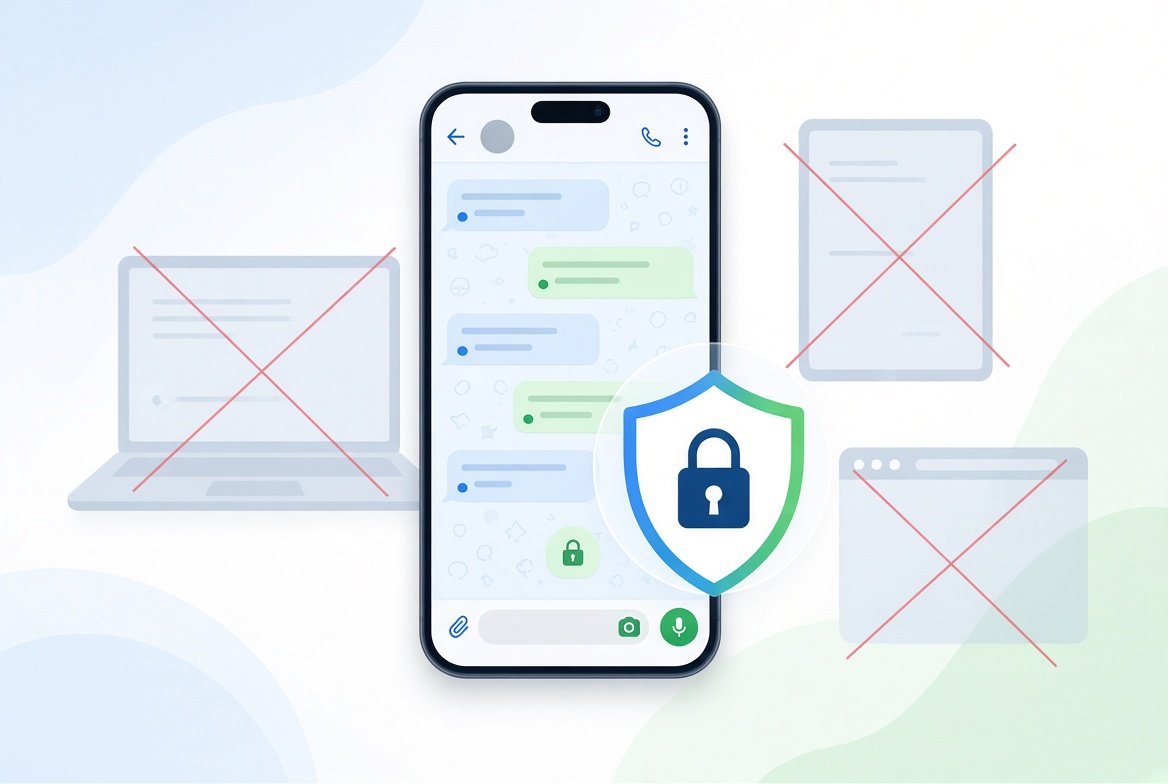
WhatsApp has introduced a new privacy-focused feature called Restricted Chat, designed to give users more control over sensitive conversations.
The feature adds an extra layer of protection by limiting certain chat functions and restricting access through linked devices. It can be particularly useful for people who want to keep highly private conversations limited to their primary smartphone.
According to the WhatsApp Help Center, Restricted Chat can be enabled for individual and group conversations and is designed to limit the use of unofficial clients and AI agents in chats.
What Is WhatsApp Restricted Chat?
Restricted Chat is a privacy feature that provides additional restrictions for selected conversations.
When enabled, the conversation receives tighter controls than a normal WhatsApp chat. According to ARY News, restricted conversations can be kept unavailable on linked hardware such as computers, tablets and WhatsApp Web, keeping access focused on the primary smartphone.
The feature is aimed at users who want greater control over sensitive conversations and the ways chat content can be accessed or processed.
How Does Restricted Chat Work?
Restricted Chat adds several limitations to a selected conversation.
Depending on the feature implementation, restrictions can include:
- Limiting access to the conversation from linked devices.
- Preventing media from the restricted chat from being automatically saved to the phone’s gallery.
- Preventing users from exporting the chat history.
- Limiting the use of unofficial WhatsApp clients.
- Restricting AI agents and certain automated interactions with the conversation.
These controls are intended to reduce the number of ways sensitive chat information can leave the protected conversation.
Why Is WhatsApp Introducing Restricted Chat?
Privacy has become increasingly important as people use messaging apps across smartphones, computers, tablets and other connected devices.
WhatsApp normally allows users to connect their account to multiple supported devices. According to the WhatsApp Help Center, users can link up to four devices to their primary phone, including supported computers, WhatsApp Web and tablets.
While linked devices make WhatsApp more convenient, they can also create additional points where private conversations may be viewed.
Restricted Chat is intended to provide an additional option for conversations where users want stronger privacy controls.
What Happens to a Restricted Chat?
When a chat is restricted, several normal WhatsApp functions can become limited.
Key restrictions include:
- The chat may not be accessible through linked devices.
- Media shared in the conversation is not automatically saved to the gallery.
- Chat history cannot be exported.
- Unofficial clients and certain AI-related interactions are restricted.
- The conversation remains available on the primary smartphone.
These restrictions make the feature particularly relevant for sensitive personal or confidential conversations.
Can Restricted Chats Be Used in Group Conversations?
Yes. The WhatsApp Help Center states that Restricted Chat can be enabled for both individual and group chats.
This means the feature is not limited to one-to-one conversations. Users can also apply additional restrictions to selected group conversations where privacy is important.
Does Restricted Chat Replace End-to-End Encryption?
No.
Restricted Chat is an additional privacy control rather than a replacement for WhatsApp’s existing encryption system.
WhatsApp states that personal messages, media and calls are protected with end-to-end encryption. More information about WhatsApp’s privacy and security approach is available through the official WhatsApp website.
In simple terms, end-to-end encryption protects the communication itself, while Restricted Chat adds additional controls over how a selected conversation can be accessed and used.
How Are Linked Devices Different From Restricted Chats?
Linked devices are designed for convenience. They allow users to access WhatsApp from supported computers, tablets and other devices.
According to the WhatsApp Help Center, linked devices allow users to access their WhatsApp account across supported devices without needing to keep the primary phone continuously connected.
Restricted Chat takes the opposite approach for selected conversations. Instead of maximizing accessibility, it prioritizes privacy and limits certain ways the conversation can be accessed or handled.
Regular WhatsApp Chat
- Can be accessed through supported linked devices.
- Designed for convenient multi-device messaging.
- Media and chat functions generally work normally.
- Suitable for everyday conversations.
Restricted Chat
- Provides additional privacy restrictions.
- Can limit access through linked devices.
- Restricts chat export.
- Limits certain unofficial clients and AI interactions.
- Helps protect sensitive conversations.
Is Restricted Chat Useful for Privacy?
Yes, especially for conversations containing sensitive information.
For example, users may consider additional restrictions useful for:
- Personal conversations.
- Confidential discussions.
- Sensitive family matters.
- Private group conversations.
- Information that they do not want easily exported or accessed from another device.
However, no digital privacy feature should be treated as a guarantee that information can never be copied or disclosed. A participant could still manually photograph or record information displayed on a device.
How to Stay Safe When Using WhatsApp Linked Devices
Restricted Chat is only one part of WhatsApp’s broader privacy and security approach.
WhatsApp recommends regularly checking linked devices and removing any device that you do not recognize. Users can find additional guidance in the WhatsApp Help Center.
Users should also:
- Check Settings > Linked Devices regularly.
- Remove unfamiliar devices immediately.
- Avoid scanning WhatsApp QR codes from unknown websites.
- Never share WhatsApp linking codes with another person.
- Keep WhatsApp updated.
- Avoid unofficial WhatsApp applications.
- Be cautious when someone asks you to link your account to another device.
Meta has also introduced warnings designed to alert users when a device-linking request appears suspicious. You can read more about Meta’s latest anti-scam measures in the Meta Newsroom.
What About Unofficial WhatsApp Apps?
WhatsApp advises users to avoid unofficial apps and websites.
According to the WhatsApp Help Center, unofficial clients are not supported because WhatsApp cannot validate their security or privacy practices. Using them may also expose an account to security risks and can potentially result in an account ban.
For better security, users should stick to official WhatsApp applications and supported platforms.
WhatsApp Privacy Is Becoming More Important
The introduction of Restricted Chat reflects a broader shift toward giving users more control over private digital conversations.
People now use messaging services across smartphones, computers, tablets and other connected devices. At the same time, AI tools and third-party services have created new questions about how private information can be accessed and processed.
By adding more restrictions to selected conversations, WhatsApp is giving users another way to decide how their most sensitive chats should be handled.
WhatsApp has also continued to introduce new security measures to strengthen account protection and verification. If you want to learn more about these developments, read our detailed guide on WhatsApp’s new security features, including multiple passkeys and stronger verification.
Frequently Asked Questions
What is Restricted Chat on WhatsApp?
Restricted Chat is a WhatsApp privacy feature that adds additional restrictions to selected individual or group conversations. It can limit certain access and functionality, including the use of unofficial clients and AI agents.
Can I use Restricted Chat for a group?
Yes. WhatsApp says Restricted Chat can be enabled for both individual and group chats.
Can a restricted chat be accessed from WhatsApp Web?
Restricted Chat is designed to limit access to protected conversations through linked devices. Current reporting indicates that restricted conversations can be kept unavailable on computers, tablets and WhatsApp Web.
Can I export a restricted chat?
No. One of the restrictions associated with the feature is that chat history cannot be exported from a restricted conversation.
Will photos from a restricted chat automatically appear in my gallery?
No. Media shared inside a restricted conversation is designed not to be automatically saved to the device’s gallery.
Does Restricted Chat make WhatsApp completely private?
No digital feature can guarantee complete privacy. Restricted Chat provides additional controls, while WhatsApp’s broader security model includes end-to-end encryption and account security features.
How many devices can I link to WhatsApp?
WhatsApp says users can link up to four devices to their primary phone. Supported devices include Windows, Mac, WhatsApp Web, Android tablets and iPads, among others.
Should I use an unofficial WhatsApp app?
No. WhatsApp recommends using its official applications and warns that unofficial apps and websites may create security and privacy risks.
Final Thoughts
WhatsApp’s Restricted Chat feature gives users another layer of control over sensitive conversations. Rather than treating every chat the same way, users can apply stronger restrictions where additional privacy is important.
The feature is especially relevant as WhatsApp continues to expand its multi-device capabilities and as AI and third-party services become increasingly connected to digital communication.
For everyday conversations, standard WhatsApp features may be sufficient. For particularly sensitive chats, however, Restricted Chat can provide useful additional protection.
Trusted Sources and References
- WhatsApp Help Center
- WhatsApp Security
- WhatsApp Official Website
- Meta Newsroom
- ARY News: WhatsApp Introduces Restricted Chat to Block Access on Linked Devices
Related Reading
WhatsApp’s New Security Features: Multiple Passkeys and Stronger Verification